
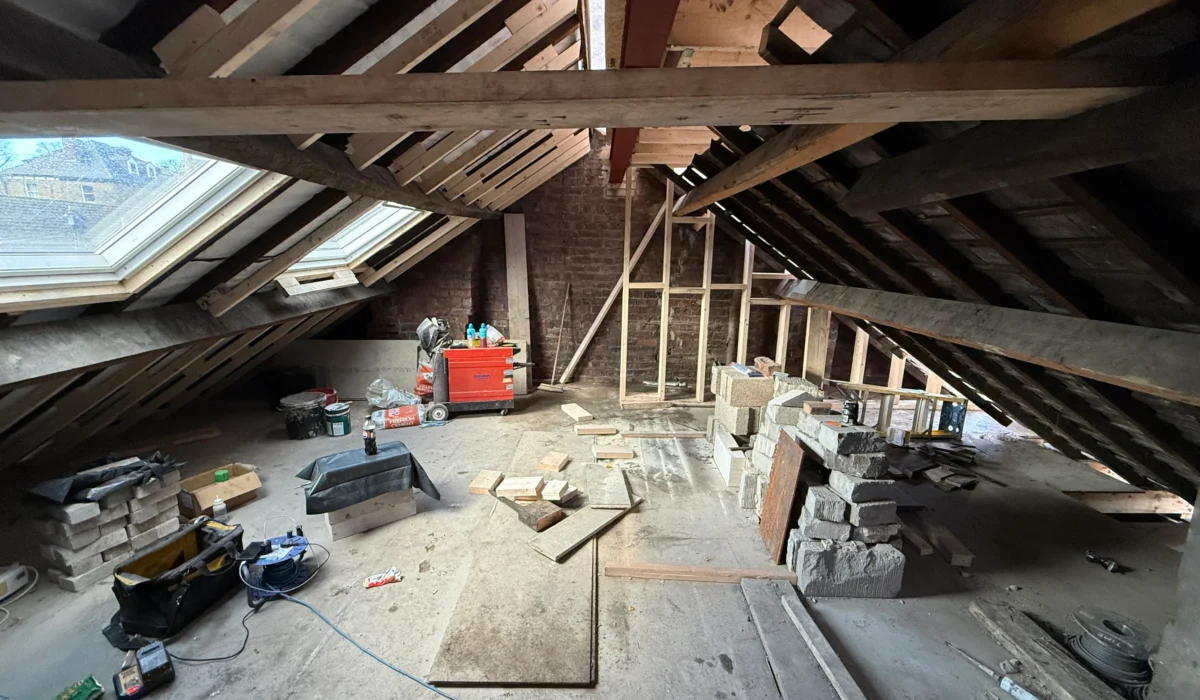
Not everyone needs a full loft conversion. Sometimes what you really need is safe, accessible storage and that’s exactly what professional loft boarding delivers. Here’s how to decide which option is right for you.
Two Very Different Solutions
It’s easy to lump loft boarding and loft conversions together as variations of the same thing. In reality, they serve quite different purposes and involve very different levels of work, cost, and disruption. Understanding the distinction is the first step to making the right decision for your home. Loft boarding is the installation of a raised floor over your existing roof joists, creating a stable platform for storage while preserving the insulation below. It makes your loft safe, accessible, and functional as a storage area but it does not create habitable living space. Loft conversion, on the other hand, transforms the roof void into a room that can be used as a bedroom, office, or bathroom, complete with insulation, plasterboard, lighting, electrics, and a proper staircase
When Loft Boarding Is the Right Answer
If your primary goal is to create more storage, free up space in your bedrooms and garage, and make your loft easier to navigate safely, loft boarding is a fast, cost-effective solution. It’s ideal for homes where the head height is insufficient for a habitable room, where the roof pitch is shallow, or where budget is a constraint. A professionally boarded loft also preserves your insulation properly. One common mistake with DIY boarding is laying boards directly on top of existing insulation, which compresses it and reduces its thermal performance pushing up your energy bills. Designed to Build installs a raised boarding system that sits above the insulation, maintaining its full depth and effectiveness. A good loft boarding job also includes a proper hatch (or an upgraded hatch if one already exists), a fitted loft ladder, and LED lighting turning an awkward, dark void into an organised, usable extension of your home.
When a Full Conversion Makes More Sense
If you need more living space not just storage and your roof has sufficient height and pitch, a conversion is the better long-term investment. The cost is higher and the work more involved, but the return in both quality of life and property value is proportionally greater. An extra bedroom or home office adds far more to a Sheffield home’s value than additional storage space. A conversion also makes sense if your family is growing, if you regularly work from home and need a dedicated workspace, or if you’re planning to sell within the next few years and want to maximise your asking price.
Can You Board First and Convert Later?
In most cases, yes boarding your loft now doesn’t preclude converting it later. However, it’s worth having a specialist assess whether your roof structure and head height are suitable for a future conversion before investing in boarding, so that the work done now doesn’t need to be undone. Designed to Build can advise on both options in a single visit
Cost Comparison
Loft boarding typically costs between £700 and £1,800 for a standard residential loft in Sheffield, depending on size, access, and the specification of the hatch and ladder. A full loft conversion starts at around £15,000 for a Velux-only conversion and rises to £45,000 or more for a dormer. The difference in budget is substantial and so is the difference in what you get.
The Bottom Line
Both options are worthwhile investments. The question is simply what you need your loft to do. Designed to Build offers a free initial assessment that will help you make the right call with no pressure and no obligation.
3 Comments