
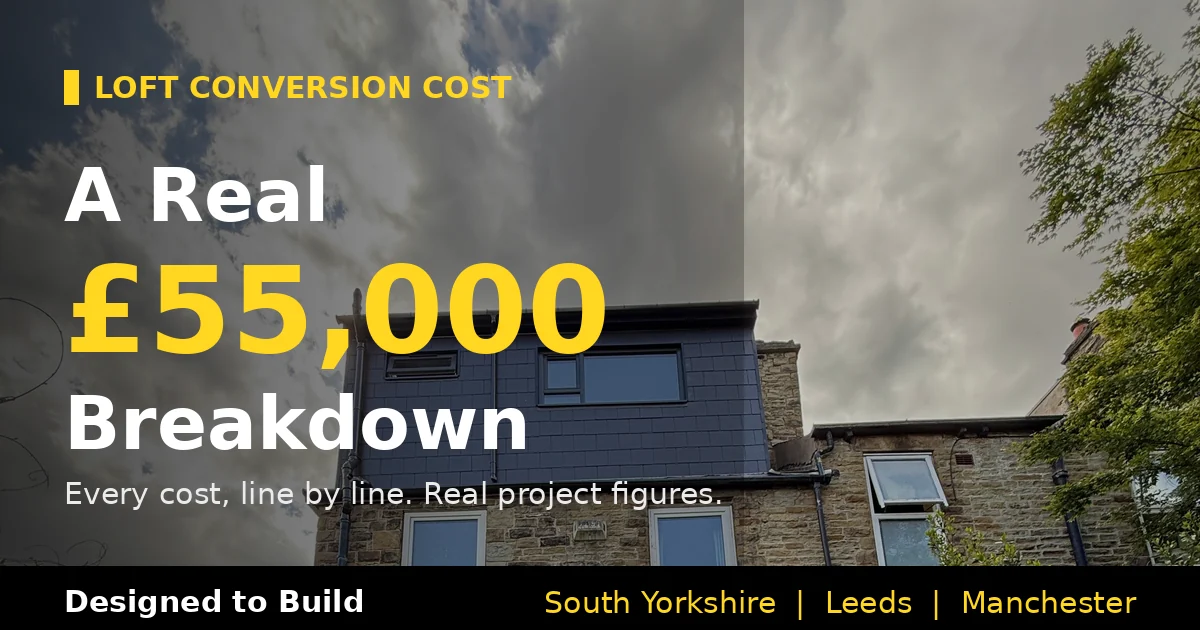
Sheffield Loft Conversion Cost Summary
Most loft conversions in the UK cost between £40,000 and £60,000. A real dormer conversion we completed came to £55,000, including a bathroom and a good standard of finish. As a rough guide, loft conversion cost per m2 runs from £1,250 to £2,000.
The exact figure depends on the type of conversion, the structural work involved, whether you add a bathroom, and the level of finish. In other words, the loft above your head is a bit of a mystery box until someone measures it. The rest of this guide opens that box and breaks the £55,000 down line by line, with real numbers from a job we actually delivered, not a number we plucked from the rafters.
Loft Conversion Cost Per m2 and Pricing Basis
A loft conversion is priced as a whole project, not by the hour. The two figures most useful for planning are the total and the cost per square metre.
- Total project cost (this example): £55,000
- Typical UK range: £40,000 to £60,000
- Loft conversion cost per m2: £1,250 to £2,000
- Pre construction share of budget: around nine percent
The per m2 figure rises with the standard of finish and falls for simpler roof light conversions. We use it as a planning guide, not a fixed quote.
Pre Construction Costs
Before any building starts, your project needs drawings, structural calculations, and building control sign off. This stage is not optional and is easy to forget when budgeting.
- Architectural drawings: set out the new layout
- Structural engineer calculations: prove the design is safe
- Building control fees: formally approve the work
On this job these came to £5,000 combined, around nine percent of the total. It is the least exciting £5,000 you will ever spend, no one frames a structural calculation, but skip it and the build does not legally happen. Leaving it out of a quote also makes a price look lower than it really is, so we always itemise it for our loft conversion clients.
Sheffield Loft Conversion Cost Breakdown by Item
The table below shows the full £55,000 broken down by item. These figures include labour and materials for each stage of the build we completed.
| Item | Cost |
|---|---|
| Drawings, calculations and building control fees | £5,000 |
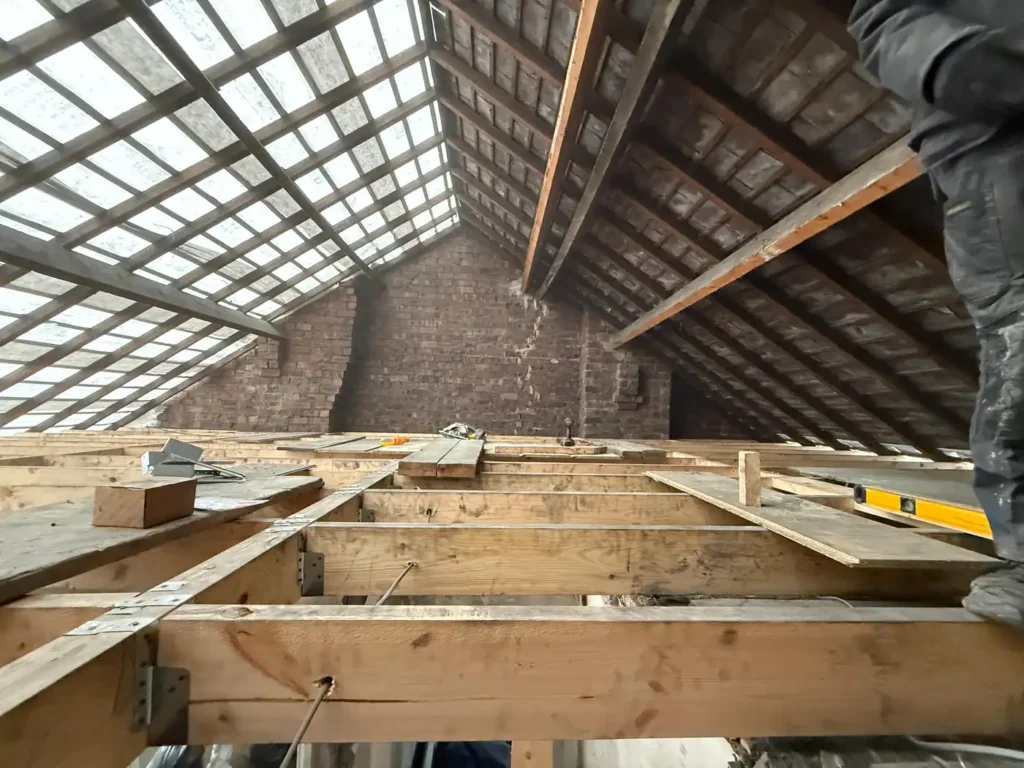
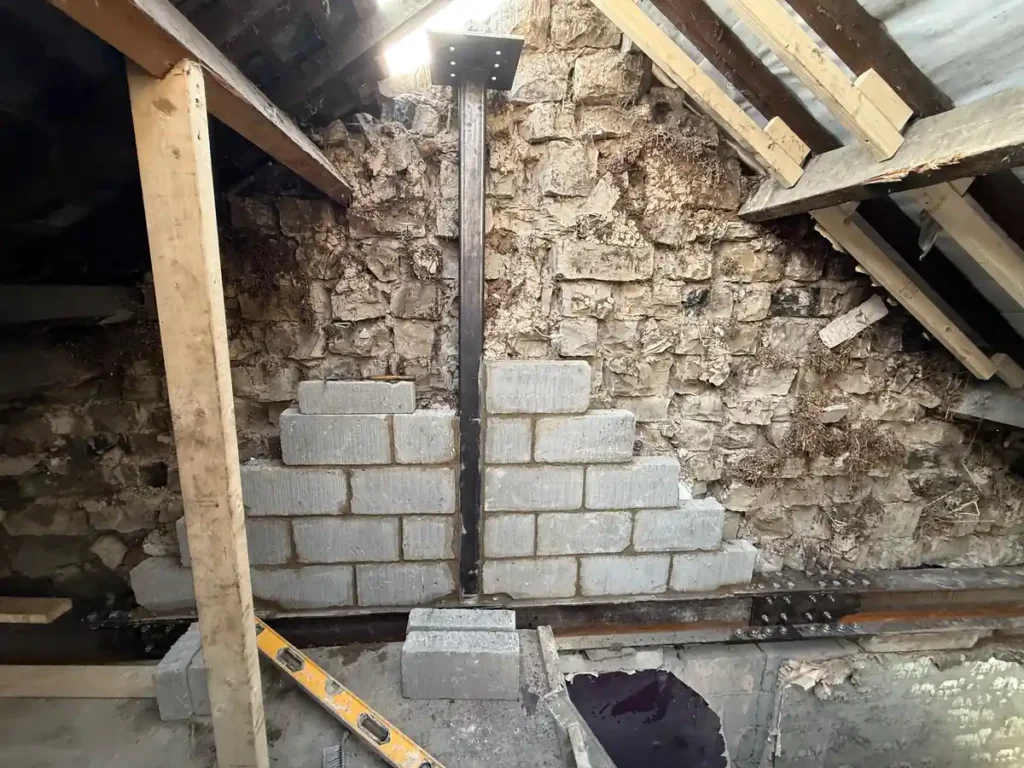
| Structural works | £9,000 |
| Dormer construction | £15,000 |
| Windows and roof lights | £3,000 |
| Staircase installation | £2,000 |
| Plumbing and electrics | £7,000 |
| Insulation and fire upgrades | £6,000 |
| Internal finishing | £8,000 |
| Total | £55,000 |
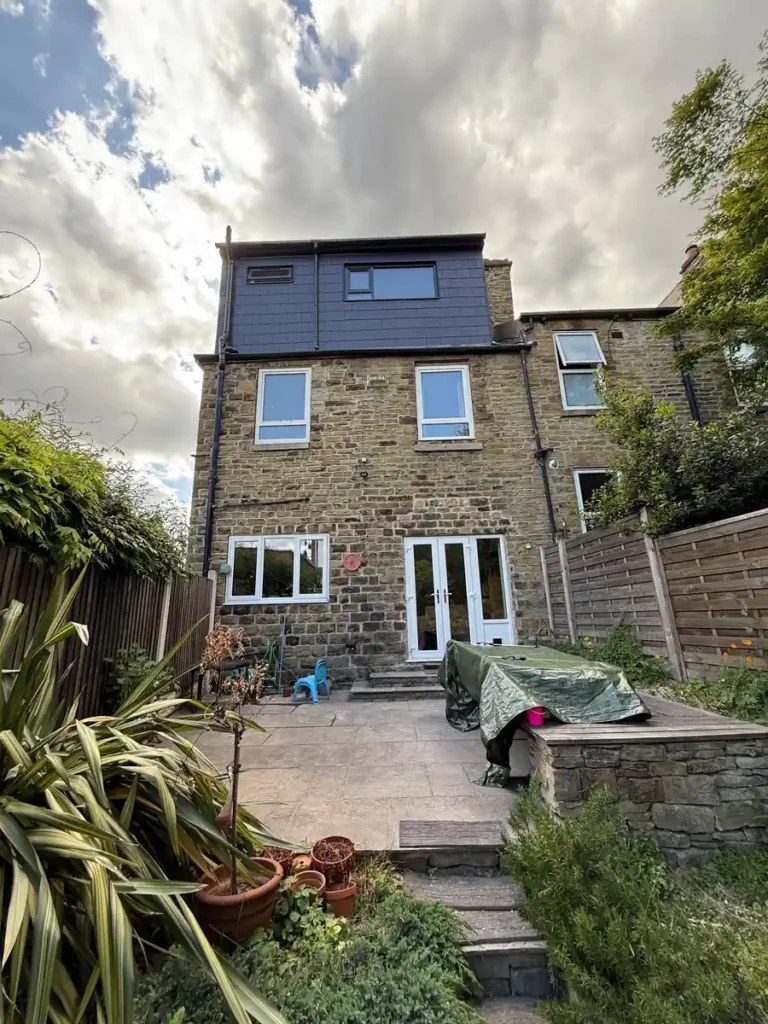
The dormer construction is the single largest cost at £15,000, which is typical. It is the work that creates full height headroom and turns a cramped loft into a proper room, the difference between a space you stand up in and one you apologise to guests about. We cover this in more detail on our dormer loft conversion page.
Loft Conversion Cost by Type
The conversion type is the biggest single factor in your total. The table below shows typical UK ranges for each, based on the work we quote across South Yorkshire, Leeds, and Manchester.
| Conversion type | Typical cost range | Best for |
|---|---|---|
| Roof light (Velux) | £25,000 to £40,000 | Lofts with enough existing headroom |
| Dormer | £45,000 to £60,000 | Adding headroom and floor space |
| Hip to gable | £50,000 to £70,000 | Semi detached and end terrace homes |
| Mansard | £55,000 to £80,000 | Maximum space, often in conservation areas |
Our £55,000 example was a dormer with a bathroom, which sits in the middle of this range.
Velux Loft Conversion Cost
A Velux or rooflight conversion is the lowest cost option, typically £25,000 to £40,000, because the roof shape stays the same and there is no dormer to build. Adding an ensuite or steel beams moves the price towards the top of that range. See our Velux loft conversions in Sheffield page for price bands and a full example costing.
Loft Conversion Cost by Property Type
The shape and age of your home also moves the price. This table shows how property type tends to affect a dormer conversion budget.
| Property type | Typical dormer cost | Note |
|---|---|---|
| Terraced | £40,000 to £55,000 | Access can add to labour time |
| Semi detached | £45,000 to £60,000 | Often suits a hip to gable upgrade |
| Detached | £50,000 to £65,000 | More roof space, more options |
| Bungalow | £45,000 to £62,000 | Whole new floor, more structural work |
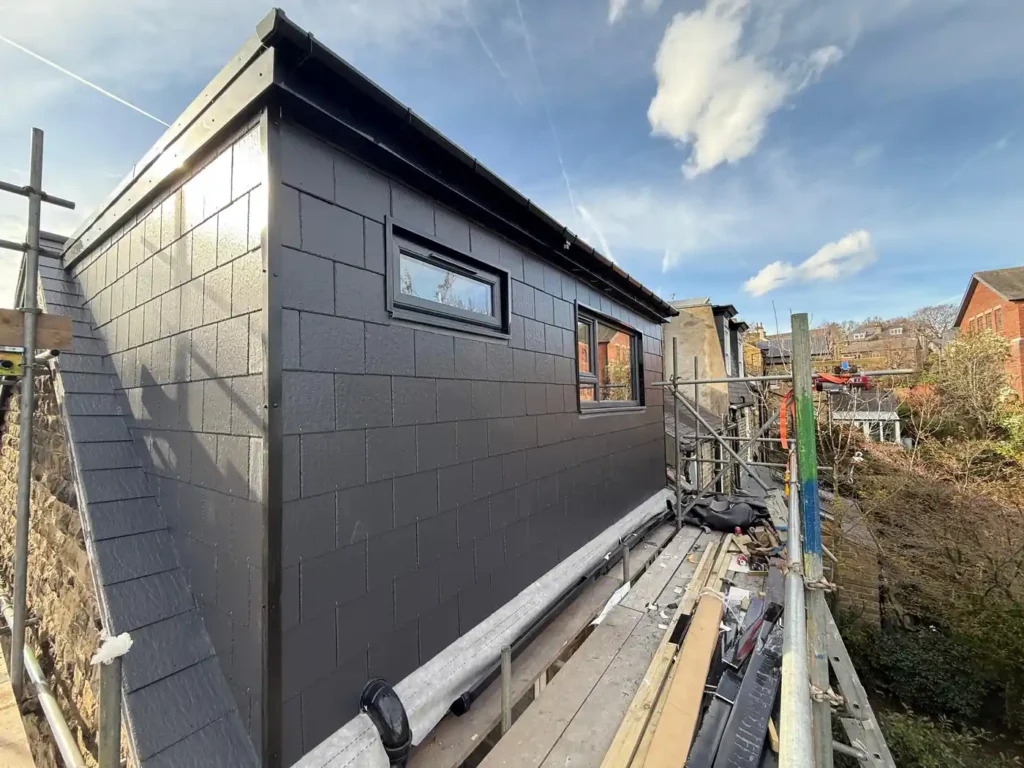
What Affects the Price
Several factors move the final cost up or down.
- Type of conversion: roof light costs least, dormer sits in the middle, hip to gable and mansard cost more.
- Adding a bathroom: pushes up plumbing, electrics, and finishing costs.
- Level of finish: premium flooring and fittings raise the internal finishing total.
- Structural work needed: more steel and reinforcement means higher cost.
- Property type: terraced, semi detached, and detached homes each present different challenges.
How to Avoid Overpaying
A little preparation keeps your budget predictable, and your future self grateful.
- Get an itemised quote so you can see each cost, like the breakdown above.
- Check that drawings, calculations, and building control are included.
- Confirm whether materials are part of the quoted price.
- Decide on your level of finish early, since it moves the budget most.
- Use a registered, insured builder so you are not paying twice to fix poor work. The cheapest quote and the most expensive lesson are often the same one.
Choosing a Conversion Type and Planning the Build
A rooflight conversion keeps the existing roofline and focuses on strengthening the floor, adding insulation, windows and a staircase. It suits a loft with enough existing head height. The separate 2026 price guide gives a typical build time of four to six weeks.
A rear dormer extends the roof outwards to create standing height and usable floor space. The additional structural work typically takes six to ten weeks. A hip-to-gable conversion replaces a sloping side roof with a vertical gable wall and is often combined with a rear dormer; the guide allows ten to fourteen weeks. A mansard substantially rebuilds the roof to maximise space, usually needs planning permission and can take twelve weeks or longer. These are indicative build periods, not a guaranteed programme for your property.
Check What Your Loft Conversion Quote Includes
Ask whether the price includes the structure, staircase, insulation, windows, plastering and internal finish. Decorating, flooring, built-in storage and an en-suite can alter the total. The separate 2026 guide quotes around £5,000 for an en-suite, but the plumbing route, fittings and specification need pricing for your own home. Do not add this again if the bathroom is already included, as it is in the £55,000 case study above.
Larger lofts cost more overall, but fixed costs such as scaffolding, a staircase and structural design are spread across more space. Older roof structures may need extra strengthening. Ask the builder to inspect the roof, access and proposed layout before relying on an online price.
The earlier 2026 guide gives indicative allowances of £400–£800 for structural engineering and £500–£900 for building control. It also gives a broader £6,000–£15,000 allowance when full design-and-build management is included. These cover different scopes and are not amounts to add automatically to every quote. Our completed example above included £5,000 for drawings, calculations and building control combined. Confirm the scope, current statutory fees, VAT treatment and any exclusions in writing.
Many loft conversions can fall under permitted development, while mansards and some larger dormers require planning permission. Building Regulations approval is a separate requirement. Architectural drawings may be needed for both processes. Check the requirements for your property and obtain the completion certificate after the work.
Regional Costs, Value and Getting a Firm Quote
Location changes labour rates and access costs. The earlier guide estimates London and South East costs at roughly 15%–40% above northern rates, but that comparison is a budgeting guide rather than a local tariff. Replace general allowances with itemised quotes for the same drawings and specification.
A loft conversion can create an extra bedroom or bathroom without taking garden space. Any increase in resale value depends on the property, local market and quality of the finished work. Compare the full project cost with moving costs and the value of making your existing home work better. A site visit and a clearly scoped design-and-build quote are the next steps towards a reliable budget.
Frequently Asked Questions
How much does a loft conversion cost in Sheffield?
A dormer loft conversion with a bathroom and a good standard of finish cost £55,000 on a recent project we completed. Most Sheffield loft conversions fall between £40,000 and £60,000, depending on the type of conversion, whether you add a bathroom, and the level of finish.
What is the most expensive part of a loft conversion?
The dormer construction is usually the single largest cost. On this project it came to £15,000, reflecting the new structure, roofing, and weatherproofing needed to extend out from the existing roof slope.
What is the loft conversion cost per m2?
Loft conversion cost per m2 in the UK generally falls between £1,250 and £2,000, depending on the type of conversion and standard of finish. Higher specification fittings and added bathrooms push the figure toward the upper end.
Which is cheaper, a loft conversion or an extension?
Compare the same usable space and specification rather than assuming one option is always cheaper. A loft may retain the garden, while an extension may solve a ground-floor layout problem that a loft cannot. Read our extension cost guide and ask for quotes based on your property.
How much does a loft staircase cost?
The staircase installation in our completed £55,000 case study was £2,000. That is the recorded figure for this project, not a universal staircase price. Design, headroom, openings, finish and making good can change the cost.
What is the 10-year rule for loft conversions?
In England, the planning enforcement time limit for operational development substantially completed on or after 25 April 2024 is generally ten years. Earlier work can be subject to transitional rules, and exceptions may apply. This is not permission to build without approval and does not replace Building Regulations compliance. Check the government’s enforcement guidance and get advice on the specific property before relying on a time limit.
About the Author
This guide was written by Sophian, co-owner of Designed to Build, drawing on real project figures from loft conversions we have delivered across South Yorkshire, Leeds, and Manchester. Designed to Build holds a 5.0 rating from 24 Google reviews. Read more on our about page or get in touch.
Get an Accurate Loft Conversion Quote
The only way to know your real loft conversion cost is to have your property and plans assessed. At Designed to Build we handle loft conversions across South Yorkshire, Leeds, and Manchester, and we give clear, itemised quotes so you can see exactly what you are paying for.
Get your loft conversion quote from Designed to Build
Cost ranges marked as Sheffield typical (conversion type, property type, per m2, and the £40,000 to £60,000 average) are Designed to Build planning estimates based on jobs we quote in our service area. The £55,000 itemised breakdown is the actual cost of a completed project.
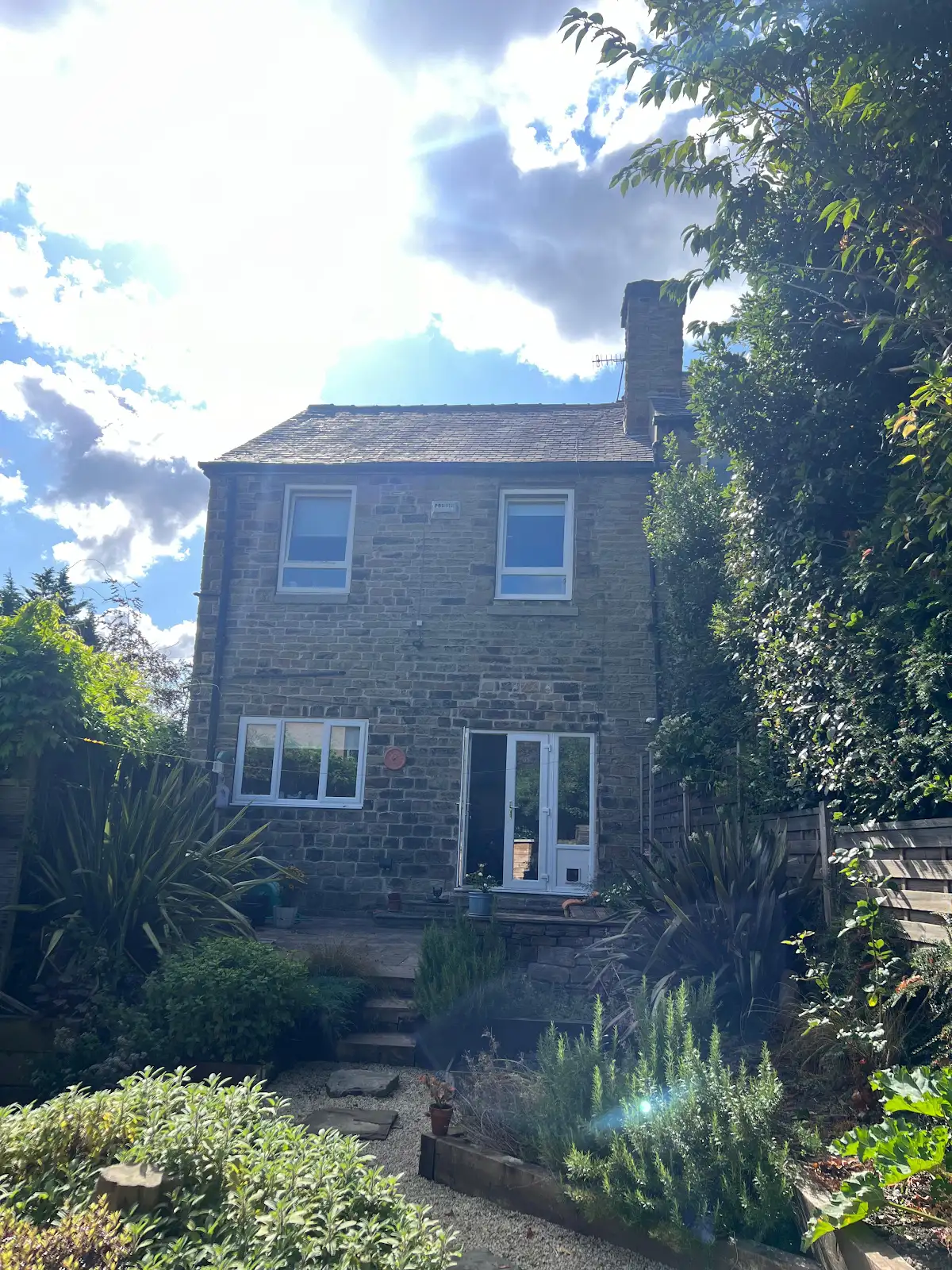
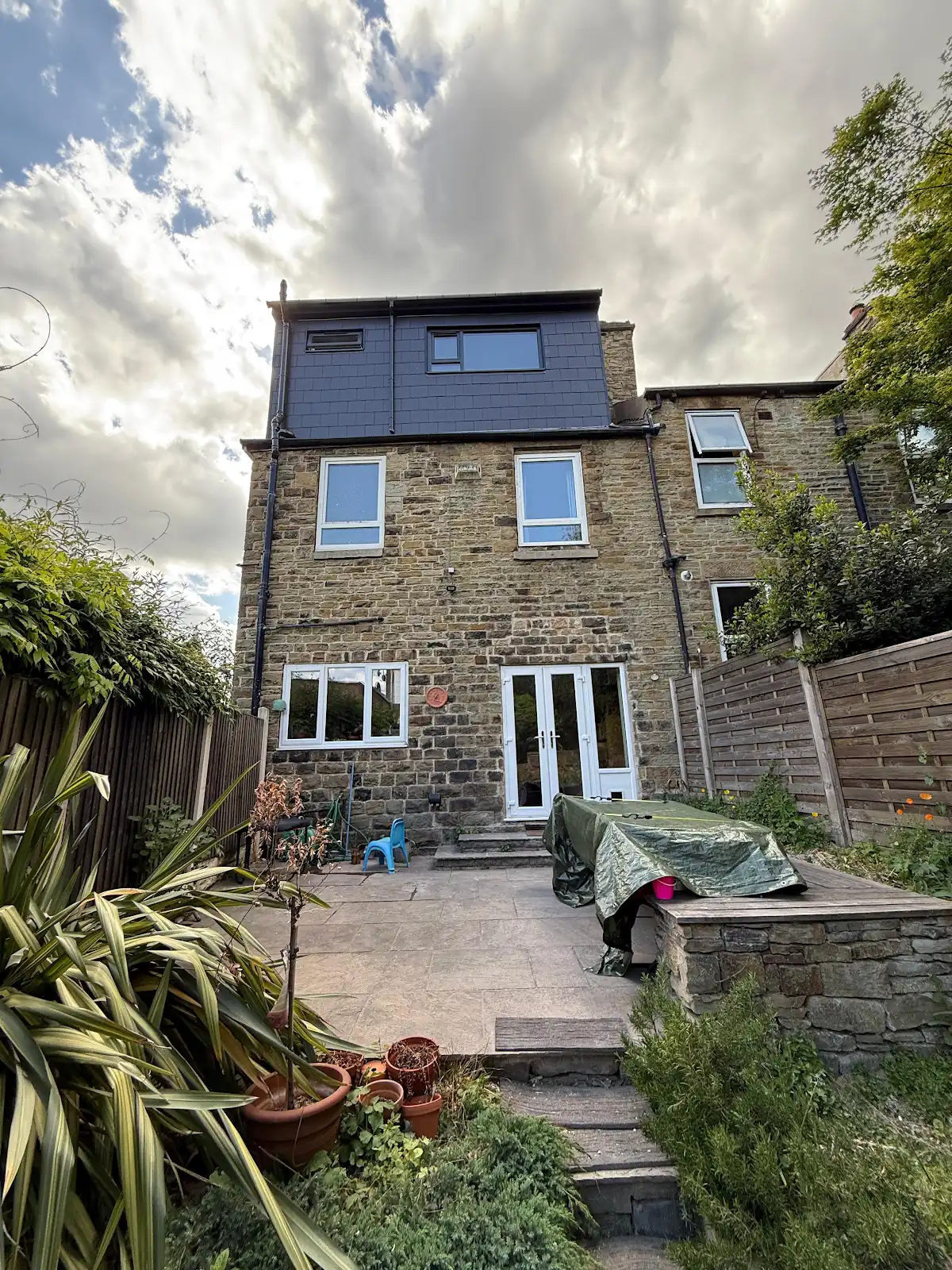
A dormer transformation from our archive
Before-and-after photographs from our supplied loft project archive. These images are not assigned to the priced case study unless the project identity is confirmed.

Sophian
Sophian Khan has over seven years of experience in the construction and property industry, working across both private residential and commercial projects. During this time, he has built practical experience dealing with the different requirements, challenges and expectations that come with delivering work across a range of property types. His experience spans projects for private homeowners as well as commercial properties, giving him a broad understanding of how construction projects need to be planned, coordinated and delivered in different environments. This experience has helped him develop a practical approach focused on understanding the property, identifying what needs to be achieved and ensuring work is carried out to a high standard. At Designed to Build, Sophian brings this experience into each project, working closely with clients throughout the process. His knowledge comes from years of real-world involvement in construction projects rather than simply theoretical knowledge, allowing him to understand many of the practical issues that can arise during building, renovation and property improvement work.